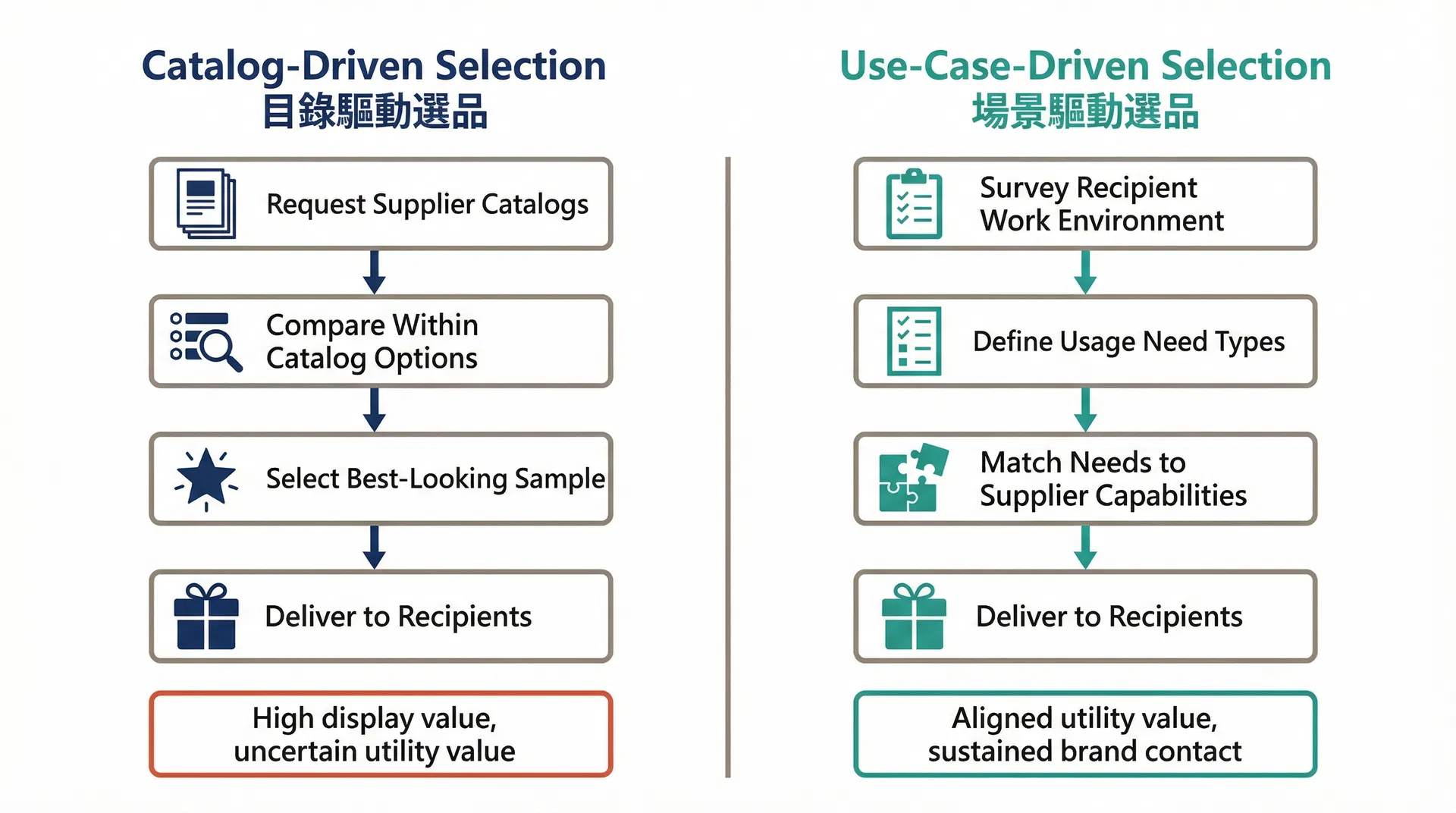
Every year as the fourth quarter approaches, corporate gift procurement undergoes a shift that appears routine but carries significant destructive potential — the decision timeline compresses, yet most procurement teams do not believe this affects the quality of their gift type selection. Their reasoning is straightforward: we know what type of custom stationery gift we want, we just need to accelerate the process. From the factory floor, however, this assumption almost never holds. Peak season capacity compression does not merely tighten delivery schedules. It fundamentally alters the precondition of which gift types are actually executable.
Understanding this requires familiarity with how factories allocate capacity during peak periods. A custom stationery production line — whether it handles notebook binding, metal pen processing, or leather embossing — can only process one product specification at any given time. When factories begin receiving year-end gift orders in late September, the first priority in production scheduling is always confirmed high-volume orders. These typically come from corporate clients who finalized their gift type decisions three to four months in advance, whose product specifications are locked, samples approved, and materials pre-sourced. These orders occupy the core of peak season capacity, and because their specifications are fixed, factories can run continuous production without frequent line changeovers.
Line changeover is the key to understanding peak season gift type constraints. Every switch from one product type to another — for instance, from A5 soft-cover notebooks to B5 hardcover notebooks — requires recalibrating binding machine fixtures, replacing cutting dies, adjusting adhesive temperature parameters, and sometimes cleaning print rollers to prevent color residue. During off-peak periods, this changeover might consume half a day to a full day. During peak season, every changeover means the line produces absolutely nothing during that window. When factory scheduling is already packed with large orders leaving only scattered gaps, the factory project manager will not authorize a full line changeover for a small-to-medium order. This is not a matter of willingness — it is the inevitable result of capacity economics.
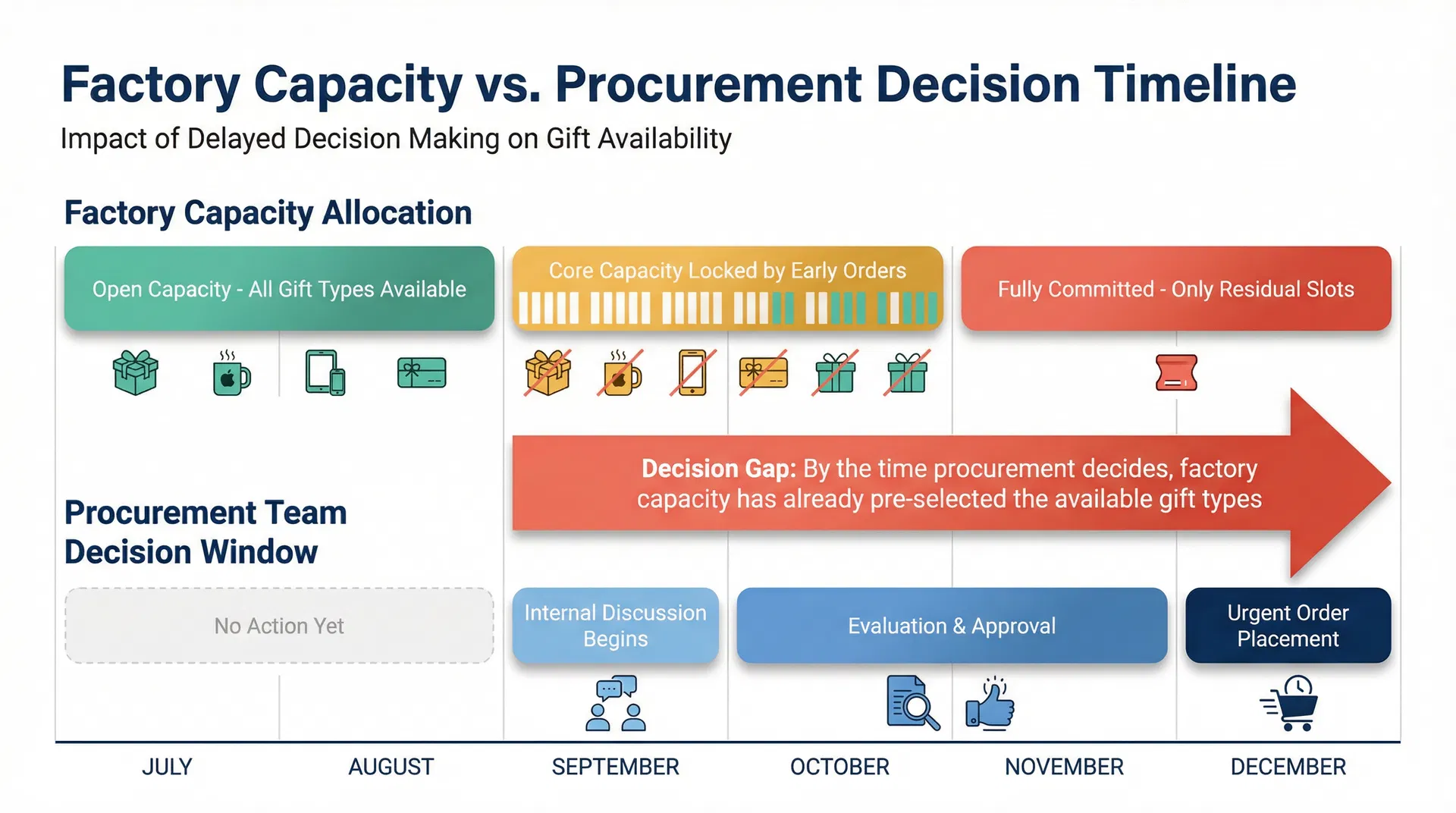
This is why companies that begin their gift type evaluation in October or November frequently discover their options look nothing like they did three months earlier. The supplier's product catalog still lists every type of custom stationery — leather notebooks, metal pen sets, desk organizer kits, custom folders — but when the procurement team actually requests quotes, the responses typically read: "This type is fully scheduled; earliest available capacity is January" or "This specification is feasible, but requires rush fees, and quality inspection time will be compressed." On the surface, the procurement team is still "selecting" a gift type. In reality, they can only choose from whichever categories the factory happens to have residual capacity for at that moment.
In practice, this is precisely where corporate gift type decisions begin to be systematically distorted. The "available type list" that procurement teams receive during peak season is not filtered according to their business requirements — it is filtered according to the factory's remaining capacity. The difference between these two filtering criteria is fundamental. A gift type selected based on business requirements considers recipient tier, usage context, brand communication objectives, and budget structure. A gift type selected based on remaining capacity considers only one question: which line has availability right now?
This capacity-driven type selection produces a particularly concealed consequence — what we internally refer to as the "phantom options" problem. Phantom options are product types that appear selectable on the supplier's quotation but have no actual available production capacity. Suppliers will not proactively inform you that a particular type is fully booked, because they want to preserve the future business relationship. They will provide a quote with a seemingly reasonable delivery date — but that date is based on the optimistic assumption that "if an existing order gets cancelled or postponed, capacity will free up." When that assumption fails to materialize, your order gets delayed, and by that point you have no remaining margin to switch gift types.
From the factory side, the capacity that is genuinely secured during peak season concentrates in three product categories. The first is the factory's "standing inventory types" — standardized stationery types that are produced year-round with dies and materials perpetually in ready state, such as basic spiral notebooks, standard-specification ballpoint pens, and universal-size document folders. These products have the lowest line changeover cost, allowing factories to quickly insert production runs during gaps between large orders. The second category is products that share the same line configuration as the current large order — if the factory is producing A5 leather notebooks for one major client, another order requiring A5 leather notebooks with a different logo can "piggyback" because no line changeover is needed. The third category is types for which the factory holds existing semi-finished inventory — such as notebook cores already cut but not yet printed, or metal pen barrels already formed but not yet laser-engraved.
When considered within the framework of how gift type decisions align with broader business scenario planning, the real risk of peak season capacity compression is not "production cannot be completed in time" — that is a time management problem solvable through advance planning. The real risk is that when gift type selection is dominated by capacity availability, the ultimately selected product type develops a systematic deviation from the enterprise's original business requirements. This deviation goes unrecognized by anyone, because the procurement team did technically "make a choice" — it is just that their choice set had been drastically reduced without their knowledge.
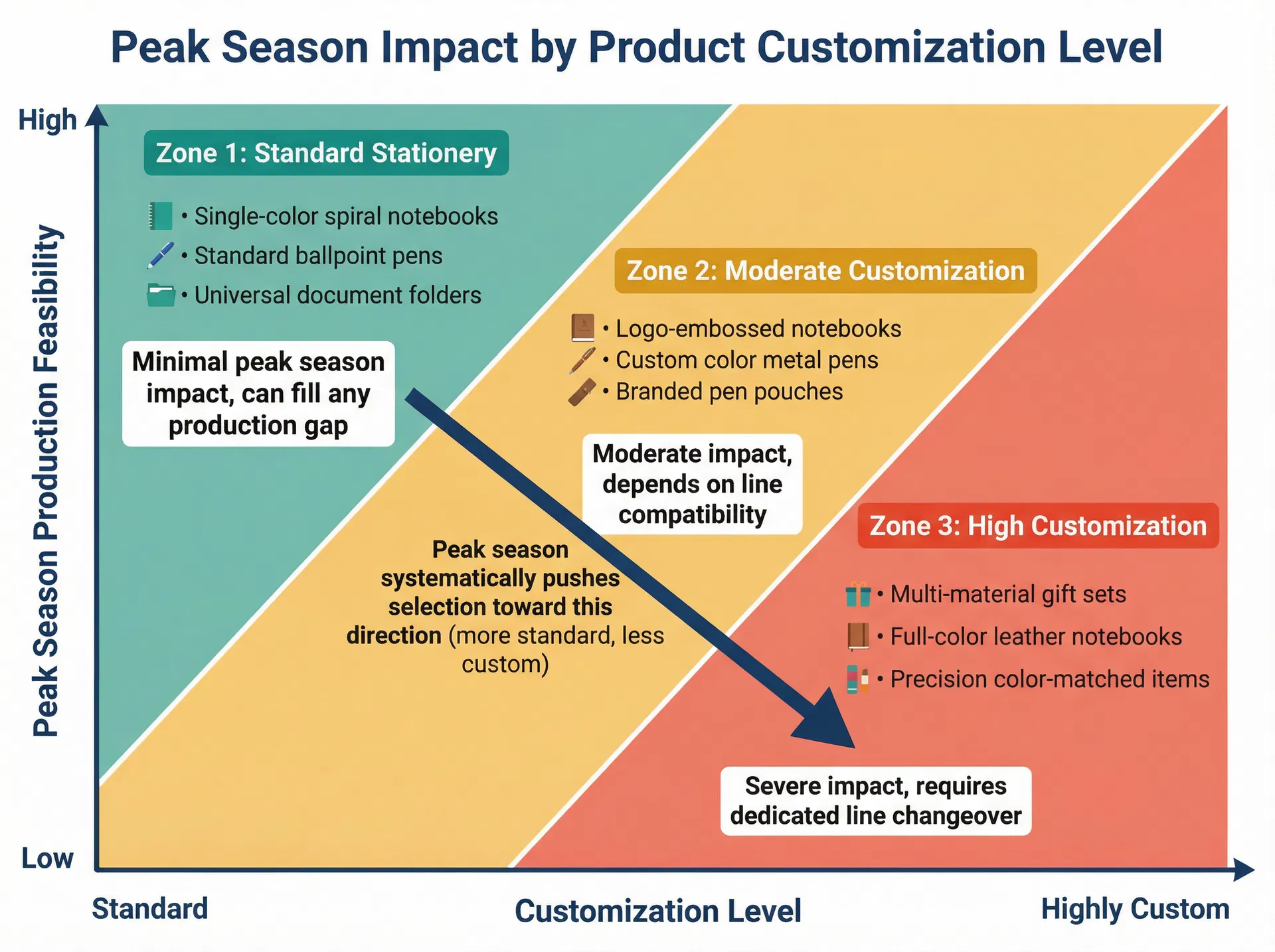
What deserves particular attention is that peak season capacity compression affects different types of custom stationery gifts unequally. Highly customized product types — such as gift sets requiring special material combinations, leather-embossed notebooks requiring multiple process steps, or full-color printed items requiring precise color matching — absorb the greatest impact because these products have the lowest production flexibility and highest line changeover costs. Conversely, highly standardized product types — such as single-color printed basic notebooks or standard-specification metal pens — experience minimal impact because they can be quickly produced during any available gap. This means peak season capacity compression systematically pushes corporate gift type selection toward "more standardized, less customized" — a direction that runs directly counter to the "uniqueness" and "sense of being valued" that most enterprises intend to convey through custom gifts.
This is not a problem that can be solved simply by "ordering earlier." Even if the procurement team initiates the gift type evaluation process in September, if they do not understand the factory's capacity allocation logic, they may still complete internal approvals only by October — and by October, the capacity landscape is essentially fixed. What truly needs to change is moving the "capacity availability inquiry" from the end of the procurement process to the very beginning. Before discussing gift types at all, confirm with the supplier: given your target delivery date, which product types still have confirmed available production capacity? The answer to that question is the real starting point for gift type selection — not the product catalog that appears to offer everything but in reality has most options already fully committed.